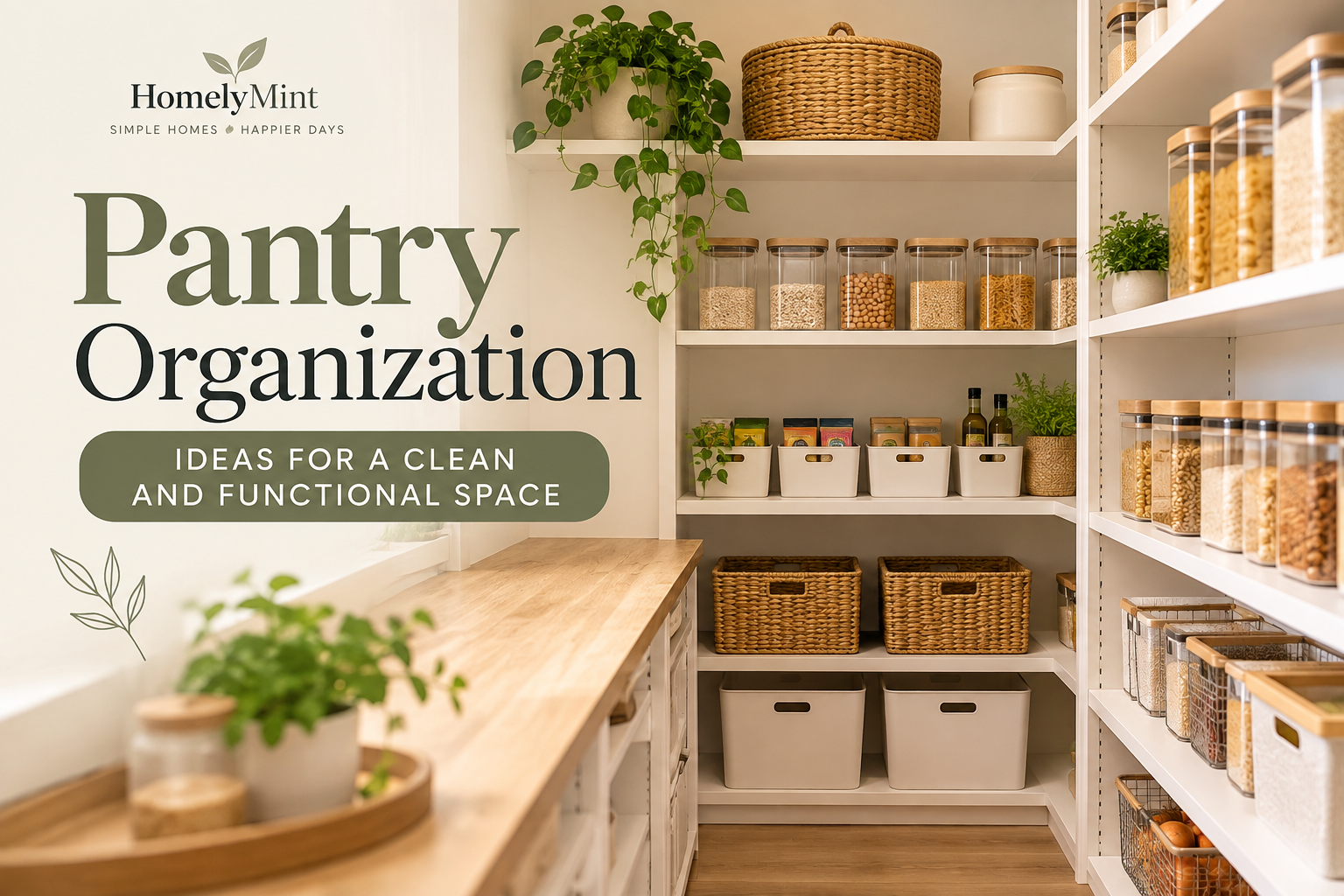
A small pantry can become cluttered surprisingly quickly. A few cereal boxes, half-used pasta bags, cans, snacks, spices, and baking supplies can make even a perfectly good pantry feel cramped.
But you don’t necessarily need a bigger pantry—you need a better system.
The best small pantry organization ideas make use of vertical space, shelf depth, doors, corners, and containers while keeping the things you use most easy to reach.
Whether you have a tiny walk-in pantry, a narrow cabinet, or just a few kitchen shelves, these simple ideas can help you create a pantry that feels calm, functional, and easy to maintain. These small pantry organization ideas can help you create a system that is easy to use and maintain every day.
1. Start by Removing Everything
Before buying organizers, take everything out of your pantry.
Place similar items together on your counter or kitchen table. Check expiration dates, remove empty packages, and set aside food your family no longer uses.
This step matters because organizing clutter without decluttering it usually means you’re simply rearranging the same mess.
Once everything is visible, you’ll have a much better idea of what type of storage your pantry actually needs. If you’re working on other small spaces too, check out our Small Laundry Room Organization Ideas for more practical ways to maximize limited space.
2.Small Pantry Organization System That Actually Lasts
Instead of putting food wherever there happens to be space, give each category a home.
For example, you could create zones for:
- Breakfast foods
- Snacks
- Baking supplies
- Pasta and grains
- Canned foods
- Sauces and condiments
- Drinks
- Backstock
A simple zoning system makes it much easier to find things and put them away later.
You don’t need dozens of labels. A few broad categories are usually enough. A simple small pantry organization system makes it easier to keep everything visible, accessible, and easy to put back.
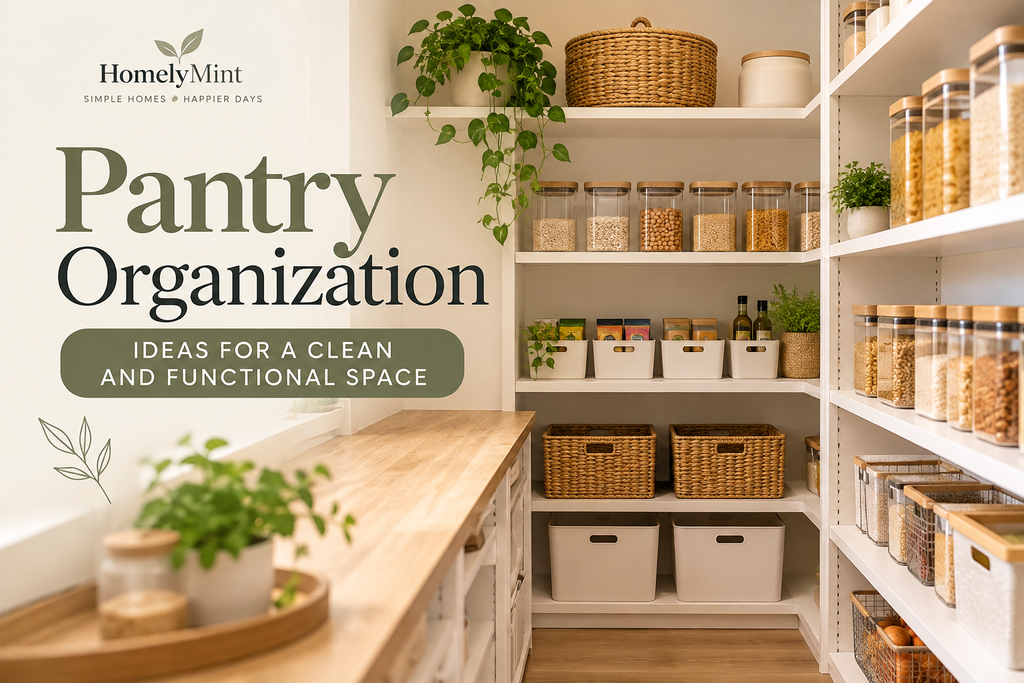
3. Use Clear Containers for Everyday Dry Goods
Open bags and mismatched food packages can quickly make a small pantry look chaotic.
For foods you use frequently, consider clear pantry storage containers so you can see what you have at a glance.
They work especially well for:
- Rice
- Pasta
- Cereal
- Oats
- Flour
- Sugar
- Snacks
Choose containers that actually fit your shelves rather than buying a large matching set first.
Tip: Measure your shelf height and depth before purchasing containers.
4. Add a Lazy Susan to Deep Corners
Deep shelves are useful, but they can also become a hiding place for forgotten jars.
A pantry lazy Susan can make sauces, condiments, jars, and small bottles much easier to reach.
Instead of moving five bottles to reach the one in the back, simply rotate the tray.
This is particularly useful for corner shelves and deep cabinets.
5. Use Tiered Risers for Cans and Jars
If you can’t see the cans at the back of a shelf, you’re more likely to forget what you have.
A tiered pantry shelf riser creates levels, so the back row sits higher than the front row.
Use one for:
- Canned vegetables
- Soups
- Beans
- Jars
- Small sauces
- Spice containers
This simple change can make a surprisingly big difference in a small pantry.
6. Turn the Pantry Door Into Storage
One of the most overlooked areas in a small pantry is the door.
A pantry door organizer can add valuable storage without taking up shelf space.
Use door storage for smaller and lighter items such as:
- Spices
- Snack packets
- Sauces
- Baking supplies
- Wraps and bags
Before installing anything, make sure there is enough clearance between the door organizer and your pantry shelves.
7. Add Under-Shelf Baskets
When your shelves have unused vertical space, don’t immediately add another shelf.
Try using an under-shelf pantry basket instead.
These baskets slide or hook underneath an existing shelf and can create a second storage level.
They’re useful for:
- Snack bags
- Tea
- Small packets
- Kitchen wraps
- Extra napkins
It’s a simple way to use space that would otherwise remain empty.
8. Keep Everyday Snacks Together
If your family reaches for snacks regularly, give them their own easy-to-access zone.
A clear snack organizer bin can keep individual packets together while preventing them from spreading across several shelves.
You can organize snacks by type:
- Kids’ snacks
- Breakfast bars
- Crackers
- Chips
- Baking treats
Open bins are especially convenient because everyone can quickly see what’s available.
9. Use Baskets to Hide Bulky Packaging
Not everything needs to be transferred into containers.
Large or awkward packages can look much tidier when grouped inside a woven pantry basket or simple storage bin.
Use baskets for:
- Extra pasta
- Chips
- Backstock
- Large bags
- Occasionally used ingredients
This creates a cleaner visual appearance without requiring you to decant every item.
For a warm, natural Homely Mint look, woven or neutral-toned baskets work beautifully.
10. Make Use of Vertical Space
Small pantries often have more vertical space than horizontal space.
Look upward.
You can use stackable pantry organizers to create additional levels without installing permanent shelves.
This works especially well when:
- Shelves are tall
- You have short containers
- Small items disappear behind taller packages
- There is a lot of unused space above food
The goal isn’t to fill every inch.
The goal is to use the available height intelligently while keeping everything accessible.
11. Give Baking Supplies Their Own Zone
Flour, sugar, sprinkles, baking powder, chocolate chips, and other baking ingredients can easily become scattered.
Create one dedicated baking section.
Use stackable food storage containers for frequently used ingredients and a small bin for packets and decorating supplies.
Keeping these items together means you don’t have to search through the entire pantry every time you bake.
12. Store Small Items in Bins
Tiny items are some of the easiest things to lose in a deep pantry.
Instead of letting them float around individually, group them in small bins.
Try separate bins for:
- Gravy packets
- Sauce packets
- Drink mixes
- Baking decorations
- Small snacks
A small pantry storage bin gives these little items a defined home and makes shelf cleanup much easier.
13. Label Only What Needs a Label
Labels can make an organized pantry easier to maintain—but you don’t need to label everything.
Label containers or baskets when:
- Several categories look similar
- Family members need help knowing where things belong
- You use opaque baskets
- You have a dedicated backstock area
Simple labels such as “Snacks,” “Baking,” “Breakfast,” and “Backstock” are often enough.
For a clean look, choose one label style and use it consistently.
14. Keep the Most-Used Items at Eye Level
Not every item deserves prime shelf space.
Keep everyday foods between waist and eye level so they’re easy to grab.
Less frequently used items can go higher or lower.
For example:
Eye level: cereal, snacks, coffee, pasta
Lower shelves: drinks, cans, larger packages
Upper shelves: backstock and occasional-use ingredients
This makes the pantry easier to use every day—not just prettier after organizing it.
15. Leave a Little Empty Space
This might be the most important small pantry organization tip of all.
Don’t organize your pantry so tightly that every container is packed against another.
Leave a little breathing room.
Empty space makes it easier to:
- See what you have
- Remove items
- Restock groceries
- Clean shelves
- Prevent clutter from returning
A pantry doesn’t need to look completely full to be useful.
A little empty space is what makes the system sustainable.
A Simple Small Pantry Organization System
If you’re starting from scratch, you don’t need to buy everything at once.
Try this simple order:
Step 1: Declutter expired and unused food.
Step 2: Group similar items together.
Step 3: Measure your shelves.
Step 4: Add containers only where they solve a real problem.
Step 5: Use risers for cans and jars.
Step 6: Add a lazy Susan to deep corners.
Step 7: Use the pantry door for additional storage.
Step 8: Label a few important categories.
Step 9: Keep everyday items within easy reach.
Step 10: Leave some empty space for future groceries.
This approach keeps your pantry organized without turning it into an expensive makeover project.
Pantry Organization Products Worth Considering
You don’t need every organizer on the market. Start with the products that solve the biggest problems in your pantry.
Look for:
- Clear pantry storage containers for dry goods
- Stackable pantry organizers for vertical storage
- Tiered shelf risers for cans and jars
- Lazy Susan organizers for corners and condiments
- Pantry door organizers for unused door space
- Under-shelf baskets for extra vertical storage
- Woven storage baskets for bulky packages
- Small storage bins for packets and snacks
Choose based on your pantry measurements and the way your household actually uses the space.
How to Keep Your Pantry Organized
The easiest pantry to maintain is one where every category has a simple home.
When groceries come in, take a minute to put them into their zones rather than placing them wherever there is an empty spot.
Every few weeks, do a quick pantry reset:
- Check for expired food
- Wipe shelves
- Combine duplicate items
- Restock containers
- Return misplaced items
- Adjust zones if your needs have changed
You don’t need a full pantry makeover every month.
A five-minute reset can prevent a small pantry from becoming overwhelming again.
Final Thoughts
A small pantry doesn’t have to feel cramped or chaotic.
With the right combination of clear containers, shelf risers, baskets, lazy Susans, door storage, and simple zones, you can make much better use of the space you already have.
The goal isn’t to create a picture-perfect pantry that looks untouched.
It’s to create a pantry where you can see what you have, reach what you need, and put everything back easily.
Start with one shelf today. Remove what you don’t need, create one simple zone, and build from there.
A calm pantry can make the whole kitchen feel a little easier to manage.
This post may contain affiliate links. If you purchase through a qualifying link, Homely Mint may earn a small commission at no additional cost to you. We only recommend products that may be useful for an organized, functional home.