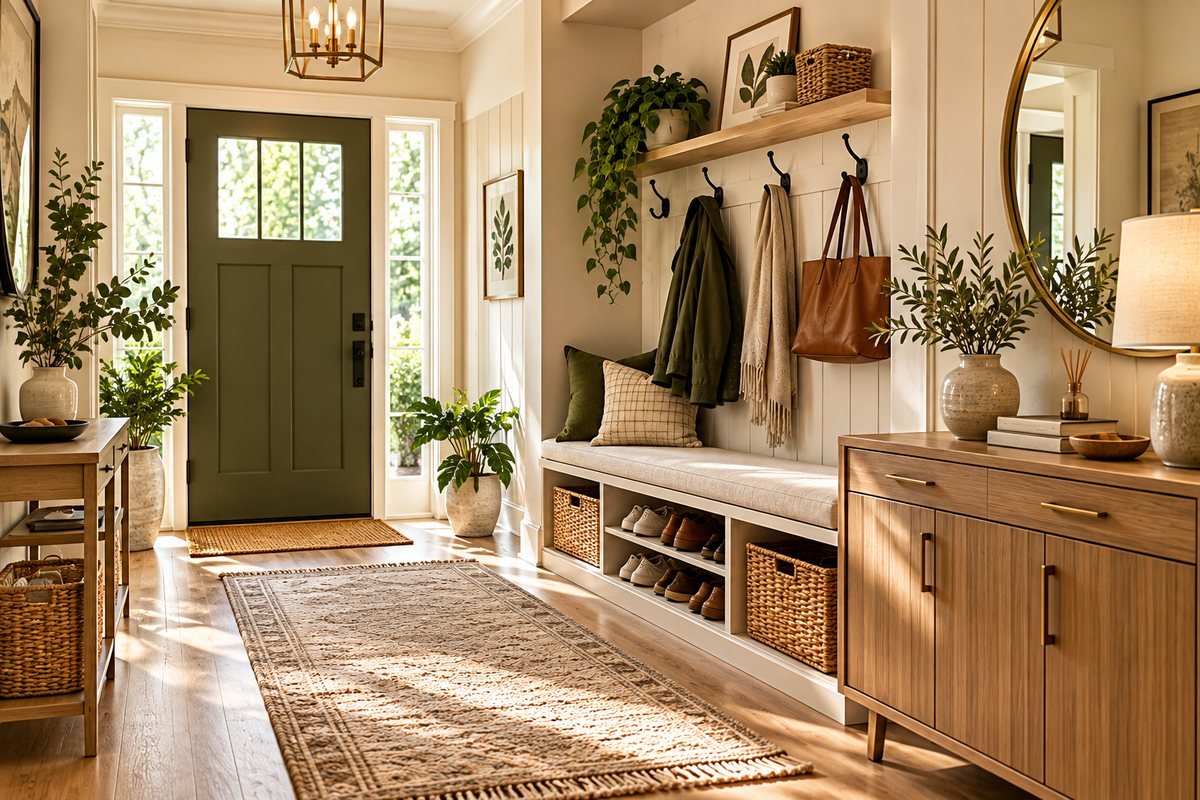
Your entryway is the first part of your home you see when you walk through the door—and it can quickly become one of the messiest. Shoes pile up, bags get dropped on the floor, keys disappear, and coats end up wherever there is an empty chair.
The good news is that you don’t need a large foyer to create an organized entryway. With the right combination of smart storage, practical furniture, and a few simple organizing zones, even a small entrance can feel calm and functional.
Whether you have a spacious foyer, a narrow hallway, or a small apartment entrance, these 15 entryway storage ideas can help you create a place for everything while keeping your home looking warm and welcoming.
These entryway storage ideas are designed to make everyday routines easier while keeping your entrance neat and welcoming.
Entryway Storage Ideas: Create a Drop Zone
A dedicated drop zone is one of the easiest ways to stop everyday clutter from spreading throughout your home.
Choose one small area near the entrance for the things you use every day—keys, mail, sunglasses, wallets, and bags.
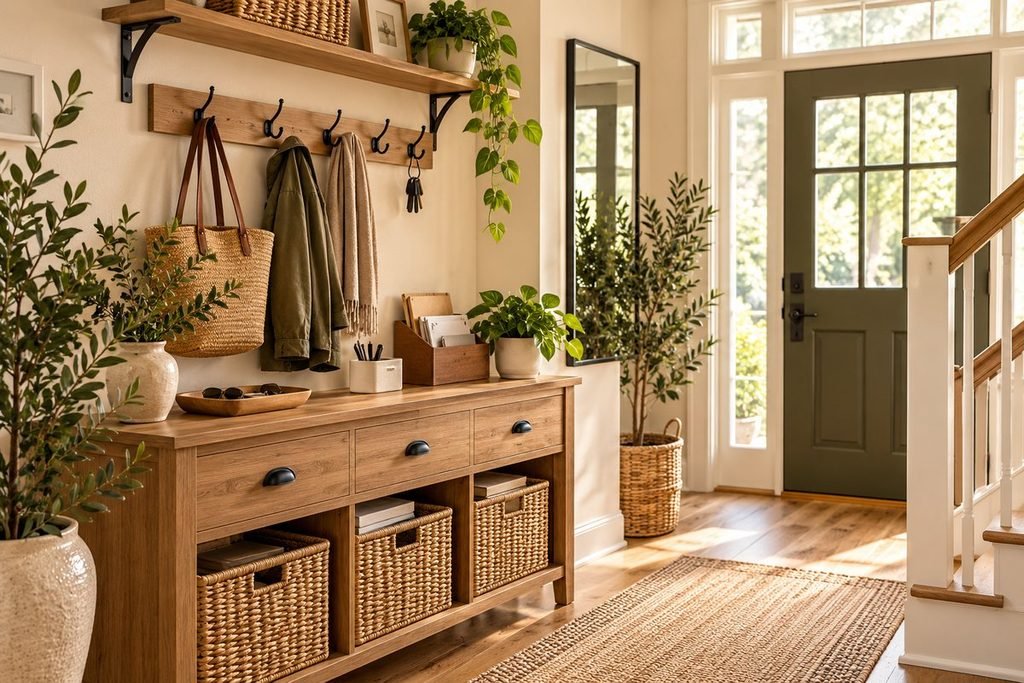
A wall-mounted entryway organizer can combine several functions without taking up valuable floor space.
For a simple setup, add:
- A small tray for keys
- Hooks for bags
- A basket for incoming mail
- A small shelf for everyday essentials
The goal is simple: everything you usually drop near the door gets its own home.
2. Add an Entryway Storage Bench
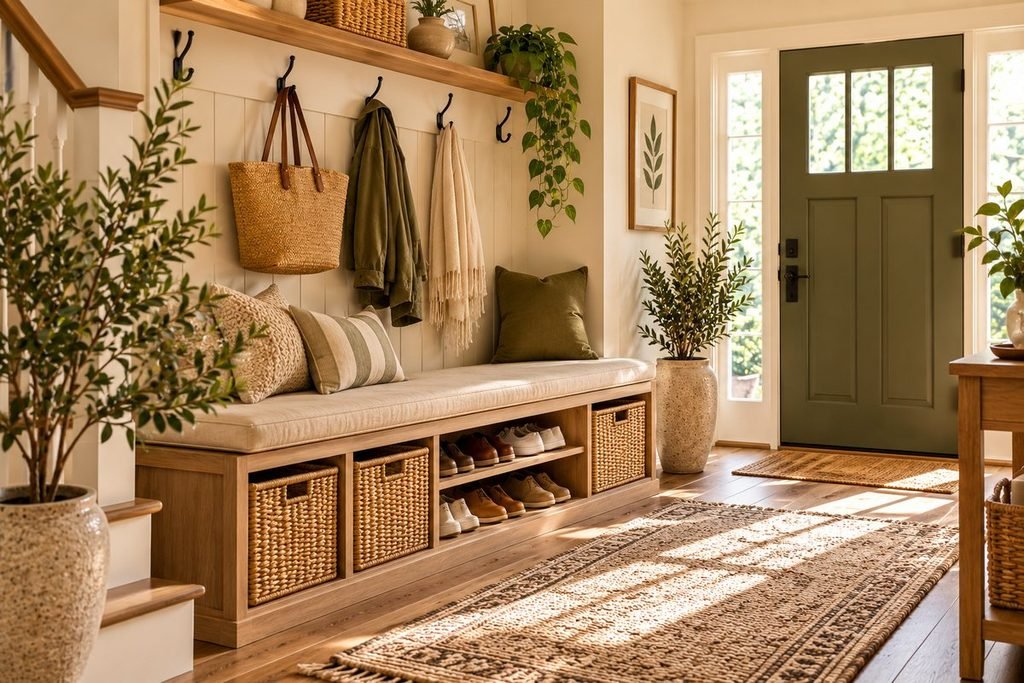
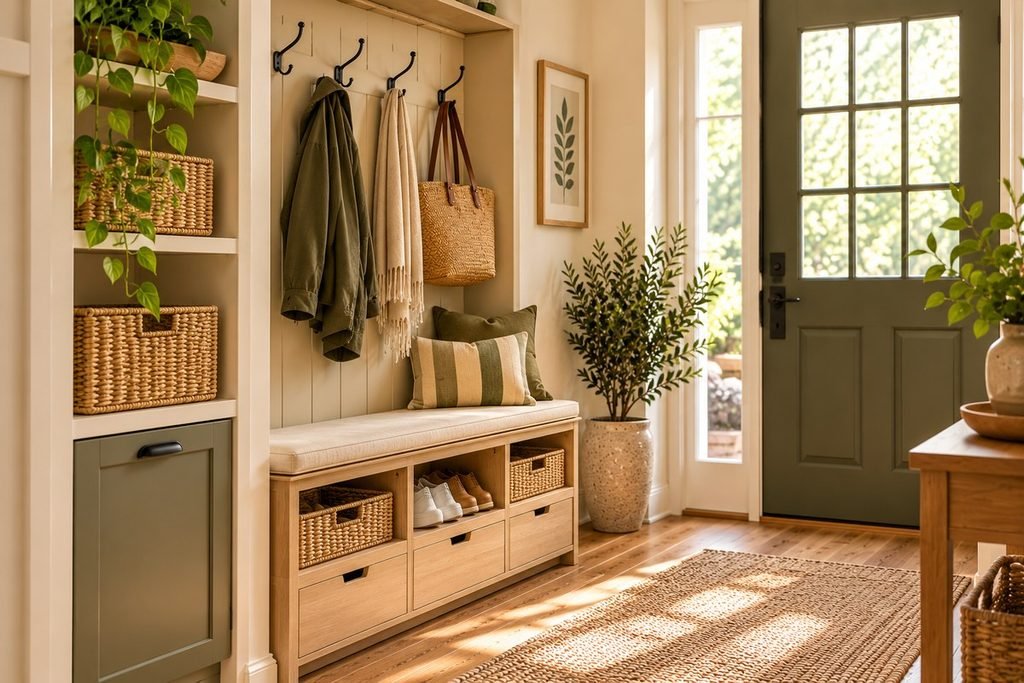
If shoes are constantly scattered around your entrance, an entryway bench can solve two problems at once.
Look for an entryway bench with shoe storage underneath. Open cubbies make everyday shoes easy to grab, while baskets can hide less attractive items.
A storage bench is especially useful in smaller homes because it provides both seating and organization without requiring two separate pieces of furniture.
Keep only frequently worn shoes underneath the bench and move seasonal footwear elsewhere.
3. Use a Shoe Cabinet Instead of an Open Shoe Rack
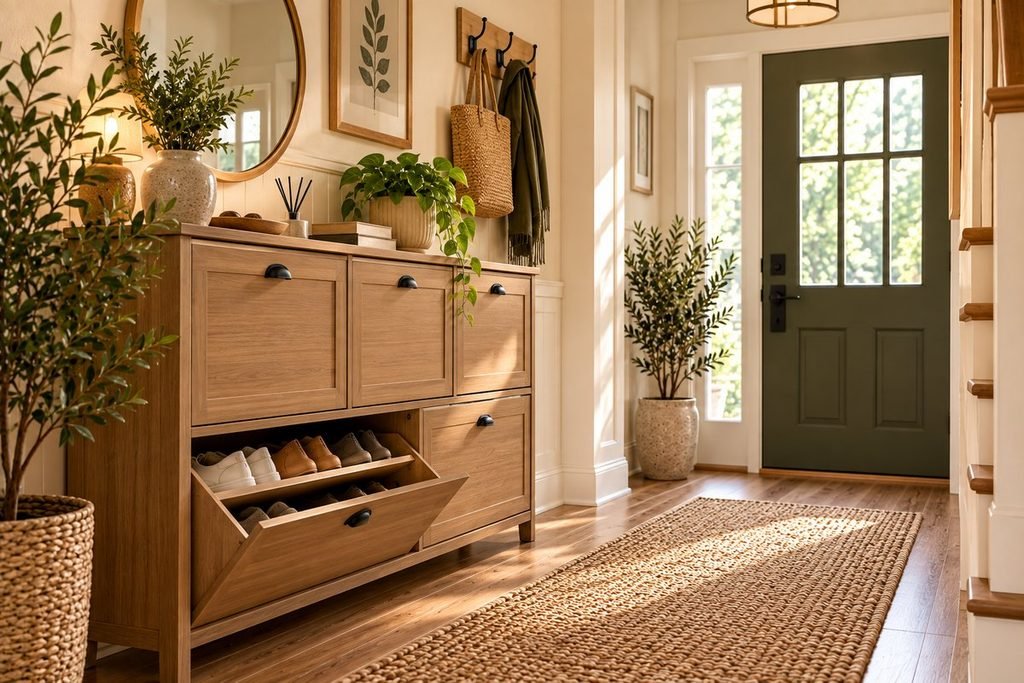
Open shoe racks are convenient, but they can make an entryway look visually cluttered.
A slim entryway shoe cabinet keeps footwear behind closed doors and creates a cleaner appearance.
Choose a narrow cabinet if your entrance is tight. Measure the available depth before buying so doors and walkways remain easy to use.
For a family entryway, assign one section to each person to make putting shoes away easier.
4. Install Wall-Mounted Coat Hooks
When floor space is limited, look upward.
A row of entryway coat hooks can hold jackets, handbags, hats, and lightweight accessories without using floor space.
Install hooks at comfortable heights and avoid overcrowding them. Leaving a little space between items makes the entire entryway look more organized.
For families, individual hooks can also make it easier for everyone to maintain their own storage area.
5. Organize an Entryway Closet
If your home has an entryway closet, make the most of every inch instead of using it as a general dumping space.
Add:
- Slim shelves
- Hanging organizers
- Small baskets
- Shoe storage
- Hooks on the inside of the door
A closet organizer system can turn one crowded closet into several useful zones.
Keep everyday items at eye level and place seasonal belongings higher up or toward the back.
6. Choose a Slim Entryway Cabinet
A narrow entryway cabinet can provide surprisingly useful hidden storage.
This works particularly well in apartments and narrow hallways where a deep console table would take up too much walking space.
Use a slim entryway cabinet to store:
- Shoes
- Bags
- Pet-free household accessories
- Reusable shopping bags
- Seasonal items
Before purchasing, measure both the cabinet depth and the available walkway.
7. Use Baskets for Bags and Accessories
Baskets are an easy way to hide everyday items while keeping them accessible.
Place one or two woven storage baskets underneath a console table, bench, or open shelf.
You can use separate baskets for:
- Scarves
- Gloves
- Reusable bags
- Small accessories
- Seasonal items
Choose baskets that complement your home’s color palette so storage becomes part of the decor rather than looking like an afterthought.
For more practical ideas on using storage zones and baskets efficiently, see our guide to small pantry organization ideas
8. Add a Floating Shelf for Everyday Essentials
A floating shelf is useful when you need a little storage but don’t have room for furniture.
Install one near the entrance for a small tray, decorative object, or a few everyday essentials.
A floating entryway shelf works especially well above hooks or a narrow bench, creating a compact vertical storage zone.
Avoid filling the shelf completely. Leaving some open space keeps the entryway visually lighter.
9. Create a Dedicated Key and Mail Station
Keys and mail are small items, but they can create a surprising amount of clutter.
Create a simple station using a wall-mounted key and mail organizer.
Give each item a specific place:
- Keys → hooks
- Incoming mail → mail slot
- Small items → tray
- Important papers → separate folder elsewhere
This tiny organizing zone can make your daily routine much easier.
10. Maximize Vertical Entryway Storage
When your floor is already full, use the wall.
A tall storage combination can include hooks, shelves, baskets, and cabinets in one vertical area.
This is especially useful for small entryways because vertical storage increases capacity without making the floor area smaller.
Think in layers:
Hooks → everyday items
Shelf → small essentials
Cabinet → shoes and hidden storage
Top shelf → seasonal items
11. Choose a Console Table with Hidden Storage
A console table can give an entryway a polished, home-magazine look while still providing useful storage.
Choose a console table with drawers or cabinets rather than a completely open design.
Use drawers for small items and the lower section for baskets.
Keep the top surface simple with just a few intentional pieces, such as a tray, lamp, vase, or small decorative object.
12. Use an Entryway Cabinet with Drawers
If you have enough space, drawers can be extremely useful for small items that don’t need to be displayed.
An entryway cabinet with drawers can hold accessories, paperwork, household items, and other things that tend to collect near the front door.
Use small drawer organizers to prevent everything from becoming mixed together.
The best storage isn’t simply about having more space—it is about making that space easy to use.
13. Make a Small Apartment Entryway Work Harder
Apartment entrances often have very little dedicated storage.
Instead of trying to fit large furniture into the space, combine several small solutions:
- Slim shoe cabinet
- Wall hooks
- Floating shelf
- Small basket
- Compact bench
A small apartment entryway organizer can create a complete drop zone without overwhelming the entrance.
If the entrance is especially narrow, prioritize wall-mounted storage first.
If you’re organizing a small apartment, you may also find these small living room organization ideas helpful for creating a more functional space beyond the entryway.
14. Use an Entryway Divider with Storage
Open-plan homes can benefit from a divider that also provides storage.
A room divider with storage can visually separate the entrance from the living area while creating useful shelves or compartments.
This is particularly helpful when the front door opens directly into a living room.
Instead of adding a purely decorative divider, choose one that performs a practical function too.
15. Create Seasonal Entryway Storage
Your entryway doesn’t need to hold everything all year.
Rotate items according to the season.
During colder months, keep coats, scarves, and boots accessible. In warmer months, move bulky winter items into closet storage and make room for lighter accessories.
Use labeled storage bins and baskets for seasonal belongings so switching them out takes only a few minutes.
This simple habit can prevent your entryway from becoming overcrowded.
Smart Ways to Keep Your Entryway Organized
Once you have the right storage, maintaining it is much easier.
Give Every Everyday Item a Home
If keys, shoes, bags, and coats don’t have designated places, they will naturally end up wherever there is room.
Assign one specific location to each category.
Keep High-Traffic Items Accessible
The things you use every day should be the easiest to reach.
Keep frequently worn shoes, everyday bags, and current-season coats close to the entrance.
Hide Visual Clutter
Not everything needs to be displayed.
Use cabinets, drawers, baskets, and bins for items that you want nearby but don’t want visible.
Don’t Overfill the Entryway
Good organization isn’t about filling every available space.
Leave enough room to walk comfortably and open doors or drawers without obstacles.
Do a Five-Minute Reset
At the end of the day, return shoes, bags, keys, and other items to their designated homes.
A small daily reset is much easier than waiting until the entire entryway becomes overwhelming.
Useful Entryway Storage Products to Consider
If you are building your entryway organization system from scratch, a few practical products can make a big difference.
Consider adding:
- Entryway shoe cabinet
- Storage bench with shoe storage
- Wall-mounted coat hooks
- Key and mail organizer
- Woven storage baskets
- Slim entryway cabinet
- Floating shelf
- Drawer organizers
- Labeled storage bins
Choose products based on the size and layout of your entrance rather than simply buying more storage.
Final Thoughts
The best entryway storage ideas are the ones that make it simple to put things away and easy to find them again.
A functional entryway doesn’t need to be large, expensive, or complicated.
The key is to create simple storage zones for the things that naturally collect near the door—shoes, coats, bags, keys, and mail.
Whether you use a storage bench, slim cabinet, wall hooks, baskets, or a combination of several solutions, the goal is the same: make it easy to put things away and easy to find them again.
Start with the biggest source of clutter in your entryway, solve that problem first, and then build the rest of your storage around it.
Frequently Asked Questions
How do I organize a small entryway?
Start with vertical storage such as wall hooks and floating shelves. Add a slim shoe cabinet or compact storage bench if space allows, and keep only everyday items near the entrance.
What is the best storage for shoes in an entryway?
A closed shoe cabinet is useful when you want a clean appearance, while a storage bench with shoe compartments works well when you also need seating.
How can I organize an entryway without a closet?
Use a combination of wall hooks, a slim shoe cabinet, baskets, and a small shelf or console. These create separate zones without requiring a dedicated closet.
How do I keep an entryway from looking cluttered?
Use hidden storage for less attractive items, limit the number of things kept near the entrance, and give everyday belongings a specific place.
Affiliate Disclosure
This post may contain affiliate links. If you purchase something through one of our links, Homely Mint may earn a small commission at no additional cost to you. We only recommend products that we believe may be useful for creating a more organized and functional home.