
Affiliate disclosure: As an Amazon Associate, Homely Mint earns from qualifying purchases. This article may contain affiliate links, which means we may earn a small commission at no additional cost to you.
A child’s bedroom should be a place to sleep, play, read, and let their imagination grow. But between toys, books, clothes, school supplies, and favorite little treasures, keeping everything organized can feel like a never-ending task.
The good news? You don’t need a huge bedroom or expensive built-in storage to create a tidy, functional space. A few thoughtful storage solutions and simple organizing habits can make a big difference.
These 15 kids bedroom organization ideas will help you make the most of your available space, keep everyday essentials within reach, and create a room that is easier for the whole family to maintain.
Whether you’re organizing a toddler’s room, refreshing a school-age child’s bedroom, or making a small space work harder, these practical ideas can help.
If you’re also planning a room makeover, explore our guide to 15 Small Kids Bedroom Ideas for more inspiration on creating a beautiful and functional space.
1. Use Open Cube Storage for Everyday Toys
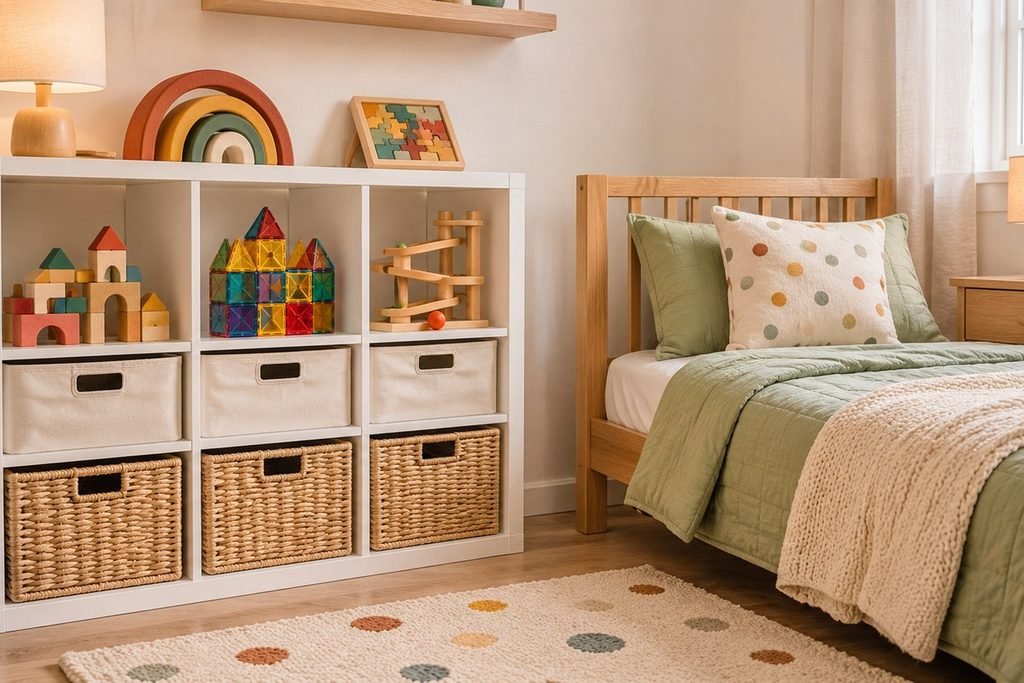
Open cube organizers are one of the easiest ways to organize a child’s bedroom. Their separate compartments make it simple to give toys, puzzles, building blocks, and building sets their own spaces.
Choose a low, sturdy organizer that fits your room. Add fabric baskets to some compartments and leave others open for larger toys or books.
The best part is that children can see where their belongings belong, making everyday cleanup easier.
A low cube storage organizer with removable fabric bins.
2. Add Labeled Storage Bins
When different toys end up mixed together, children may struggle to find what they need. Labeled bins make the system easier to understand.
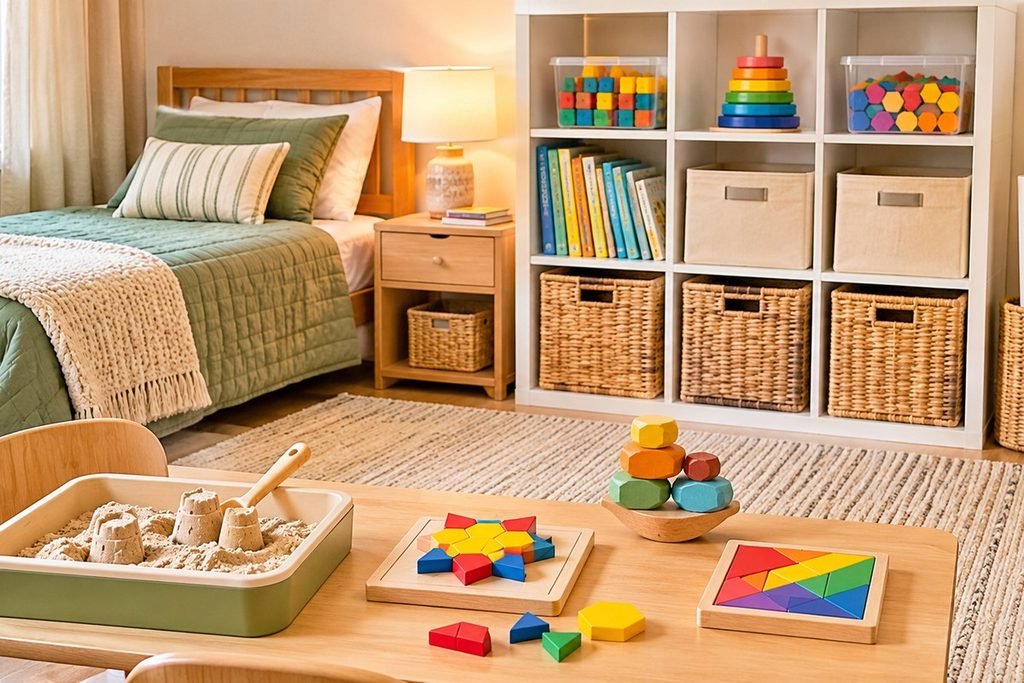
Use separate containers for building blocks, dolls, cars, puzzles, craft supplies, and soft toys. For younger children who cannot read yet, picture labels can make identification easier.
Choose lightweight bins with handles so children can move them without difficulty.
Keep frequently used items on lower shelves and less frequently used belongings in adult-accessible storage.
3. Make Use of Under-Bed Storage
The space underneath a bed is often overlooked, especially in small bedrooms.
Rolling storage containers, shallow drawers, or soft under-bed organizers can hold extra bedding, seasonal clothing, dress-up costumes, and toys that aren’t used every day.
Measure the available clearance before purchasing a container. Choose smooth-rolling options that are easy to pull out and put away.
This is a particularly useful solution when floor space is limited.

4. Create a Small Reading Corner with Book Storage
A dedicated reading corner can make books feel like an inviting part of the bedroom rather than another source of clutter.
Install a child-accessible book ledge or use a small forward-facing bookshelf. Display a handful of favorite covers and keep additional books in a nearby basket.
You can add a comfortable floor cushion, a small reading light, and a soft rug to make the area welcoming.
Rotate the displayed books occasionally to keep the selection interesting without overcrowding the shelves.
5. Organize the Kids’ Closet with Matching Bins
A closet can quickly become disorganized when clothing, shoes, bags, and accessories are all stored together.
Start by grouping similar items. Use labeled baskets for pajamas, seasonal accessories, extra bedding, and smaller clothing items.
If the closet has enough space, add a second hanging organizer or adjustable shelf.
Keep everyday clothing within your child’s reach while storing seasonal or occasional items higher up.
6. Use Hanging Organizers to Save Shelf Space
Hanging organizers are useful when a bedroom has limited drawers or closet shelving.
Over-the-door organizers can also make use of otherwise unused space, provided the door closes properly and the organizer is installed securely.
Choose a design that suits the door or closet dimensions, and avoid placing heavy objects where they could fall.
7. Choose a Storage Bench for Extra Seating
A storage bench can provide two useful functions in one piece of furniture.
Place one near a window or at the foot of the bed. The inside can hold extra blankets, soft toys, or dress-up accessories, while the top offers a place to sit.
For younger children, choose a stable design with a safe, easy-to-use lid. Avoid heavy lids that can close unexpectedly or create finger-pinch hazards.
A bench with built-in drawers is another practical option.
8. Try a Simple Toy Rotation System
Sometimes the problem isn’t a lack of storage. It’s simply having too many toys available at once.
A toy rotation system helps keep the bedroom manageable.
Every few weeks, swap some toys so children can enjoy familiar items again without keeping everything out at the same time.
You don’t need a strict schedule. The goal is to make the room easier to manage while keeping playtime interesting.
9. Add Drawer Dividers for Smaller Items
Small belongings often turn bedroom drawers into messy collections of unrelated items.
Drawer dividers can separate socks, hair accessories, pajamas, underwear, and other everyday essentials.
Choose adjustable organizers that fit the drawer dimensions. Avoid filling every section with too many items.
A simple system with a few clear categories is easier to maintain than an overly complicated arrangement.Adjustable drawer dividers or small fabric drawer organizers.
10. Set Up a Dedicated Art Supply Station
Crayons, markers, paper, stickers, coloring books, and craft materials can easily spread throughout a child’s bedroom.
Create one dedicated art station using a small rolling cart, tabletop organizer, or divided storage box.
Keep frequently used supplies together and separate them from toys and clothing.
For younger children, store potentially messy or age-inappropriate materials out of reach and supervise their use.
A small station gives creative activities a clear home and makes cleanup more straightforward.
11. Display Books on Wall-Mounted Shelves
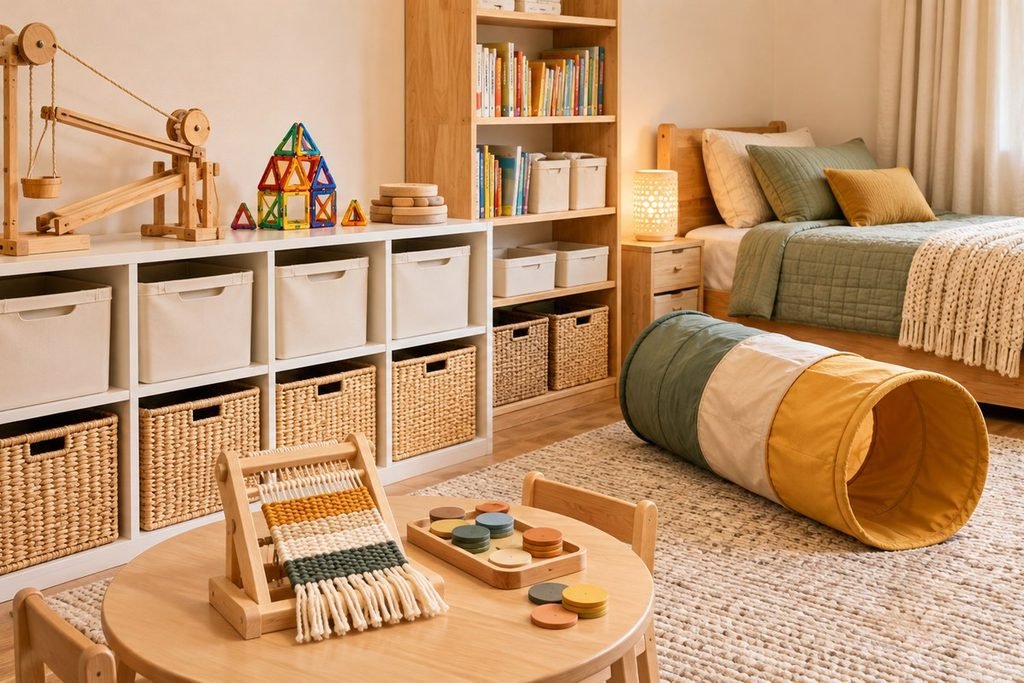
If the bedroom floor is already crowded, consider using vertical wall space for lightweight book storage.
Narrow picture ledges or children’s bookshelves can display favorite books without taking up much floor area.
Arrange books by size, color, or theme if that makes the shelf easier to maintain.
Always follow the manufacturer’s installation instructions, use appropriate wall fixings, and keep shelves securely mounted and away from climbing access.
12. Use a Large Basket for Stuffed Animals
Stuffed animals are lovely, but they can quickly take over beds, chairs, and floor space.
A large woven-look basket or soft-sided storage basket gives plush toys a dedicated home.
Place it in an accessible corner so children can put their favorite toys away after playing.
Choose a lightweight basket with no sharp edges or hazardous openings. Make sure it is stable and does not create a tripping hazard.
You can also keep only a small selection of stuffed animals on the bed and store the rest nearby.
13. Make the Most of Vertical Storage
When a child’s bedroom is small, using vertical space can free up valuable floor area.
Consider wall-mounted hooks for lightweight bags, low-access shelving for books, and securely installed organizers for everyday essentials.
A pegboard can also provide flexible storage for older children’s accessories and craft supplies when installed appropriately.
Keep heavy items low, avoid placing tempting objects high where children may climb to reach them, and secure furniture and shelving according to safety guidance.
14. Choose Furniture That Offers More Than One Function
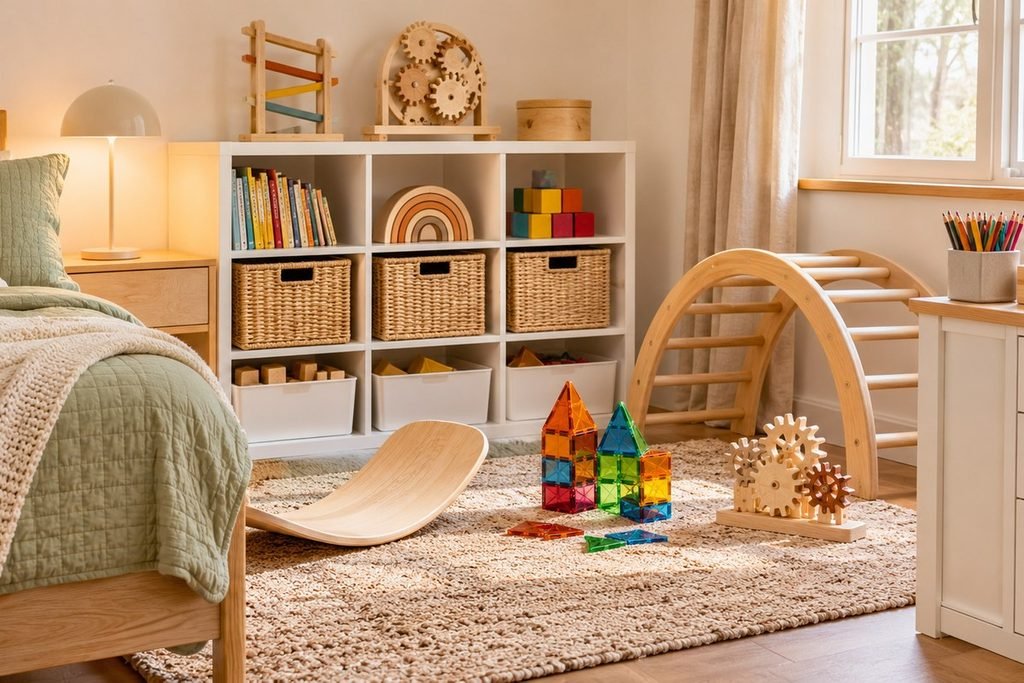
Multifunctional furniture can make a small bedroom feel more spacious.
Look for beds with built-in drawers, desks with storage compartments, bedside tables with shelves, or seating with hidden storage.
Before buying, measure the room carefully and check whether drawers and doors can open without blocking walkways.
Choose sturdy furniture that suits your child’s age and needs. For dressers, bookcases, and other tip-over-prone furniture, install appropriate anti-tip restraints.
15. Create a Simple Five-Minute Cleanup Routine
Even the best storage system needs a simple routine to keep it working.
Instead of expecting children to clean their entire room perfectly, divide tidying into a few small tasks.
For example:
- Put toys back into their assigned bins.
- Return books to the bookshelf.
- Place dirty clothes in the laundry hamper.
- Put shoes and bags in their designated spots.
- Clear the floor before bedtime.
Younger children may need help, while older children can gradually take more responsibility.
Keep the routine realistic. A room doesn’t have to look perfect every day to be organized and comfortable.
How to Keep a Kids’ Bedroom Organized Long-Term
The secret to maintaining an organized bedroom is creating a system that fits your child’s daily habits.
Start with fewer storage categories rather than buying lots of containers. Keep frequently used items accessible, make cleanup simple, and regularly review toys and clothing that are no longer needed.
A few practical habits can help:
- Return items to their assigned places after use.
- Remove broken or outgrown belongings regularly.
- Rotate toys when the available space feels crowded.
- Keep storage categories simple and easy to understand.
- Involve children in choosing baskets, labels, and organization zones.
Most importantly, remember that a child’s room is meant to be lived in. Some toys will come out, books will be read, and creative projects will happen. The goal is not a perfectly styled room at all times. It’s a functional space that feels comfortable and is easy to reset.
Final Thoughts
Creating an organized kids’ bedroom doesn’t have to involve a complete makeover or expensive storage furniture.
From open cube organizers and under-bed storage to reading corners and simple cleanup routines, small changes can make everyday life easier.
Start with one area that causes the most clutter, choose a storage solution that suits your available space, and build from there.
With a little planning, you can create a bedroom that feels tidy, welcoming, and ready for everything childhood brings.
Looking for more inspiration? Explore our guide to [15 Small Kids Bedroom Ideas] to discover practical ways to make a smaller bedroom feel comfortable, beautiful, and functional.
Frequently Asked Questions
How do I organize a small kids’ bedroom?
Start by decluttering, then use vertical storage, under-bed organizers, low cube shelves, and multifunctional furniture. Keep frequently used items accessible and avoid filling every available space with storage.
What is the best storage for kids’ toys?
Open cube organizers, lightweight fabric bins, shallow baskets, and divided toy containers are useful options. Choose storage based on the size and type of toys, and make sure children can access it safely.
How can I teach children to keep their bedrooms organized?
Give belongings simple, consistent storage locations. Use picture labels for younger children and introduce a short daily cleanup routine. Make the process manageable rather than expecting perfection.
How often should I declutter a child’s bedroom?
Review toys, clothing, and books every few months or whenever storage starts feeling crowded. Remove broken items and consider donating suitable belongings that are no longer used.
How can I organize a shared kids’ bedroom?
Give each child a clearly defined personal storage area. Use separate labeled bins, individual drawers, and shared storage for items both children use. Make sure both children can access their everyday belongings.
Are open shelves safe in a child’s bedroom?
Open shelves can be useful, but furniture and shelving must be installed securely. Anchor bookcases, dressers, and other tall furniture to the wall using appropriate restraints. Keep heavy items on lower shelves and avoid placing attractive objects high enough to encourage climbing.
Safety note: Follow current product instructions and child-safety guidance when installing bedroom storage. See the U.S. Consumer Product Safety Commission’s childproofing guidance for furniture tip-over prevention.