

A small kids’ bedroom can be challenging to organize. Between the bed, toys, clothes, books, and study supplies, even a beautifully decorated room can start feeling crowded.
But having a small bedroom doesn’t mean your child has to miss out on a comfortable, functional, and beautiful space.
The secret is choosing furniture that works harder, using vertical space, and giving every item a designated home. With a few clever changes, you can create a bedroom that feels more open while still providing room for sleeping, playing, studying, and relaxing.
Whether you’re decorating a toddler’s room, updating a school-age child’s bedroom, or organizing a compact shared space, these small kids bedroom ideas will help you make the most of every inch.
Affiliate disclosure: As an Amazon Associate I earn from qualifying purchases. This post may contain affiliate links, which means I may earn a commission at no additional cost to you.
15 Small Kids Bedroom Ideas That Make a Big Difference
1. Choose a Bed with Built-In Storage

When floor space is limited, your child’s bed should do more than provide a place to sleep.
A storage bed with built-in drawers creates extra room for clothing, spare bedding, toys, and seasonal items without requiring another bulky piece of furniture.
Choose drawers that open easily and leave enough clearance for them to slide out completely.
For a budget-friendly alternative, use shallow storage containers underneath an existing bed.
Shopping idea: Look for twin storage beds with drawers.
2. Make the Most of Vertical Wall Space
One of the smartest ways to maximize a small kids’ bedroom is to use the walls instead of filling the floor with additional furniture.
Install suitable wall shelves for books, decorative storage boxes, and lightweight accessories. A tall shelving unit can also provide more storage than a wide, low cabinet.
Keep frequently used belongings within your child’s reach and reserve higher shelves for items that adults manage.
Always secure shelving and tall furniture properly.
3. Consider a Loft Bed for Older Children
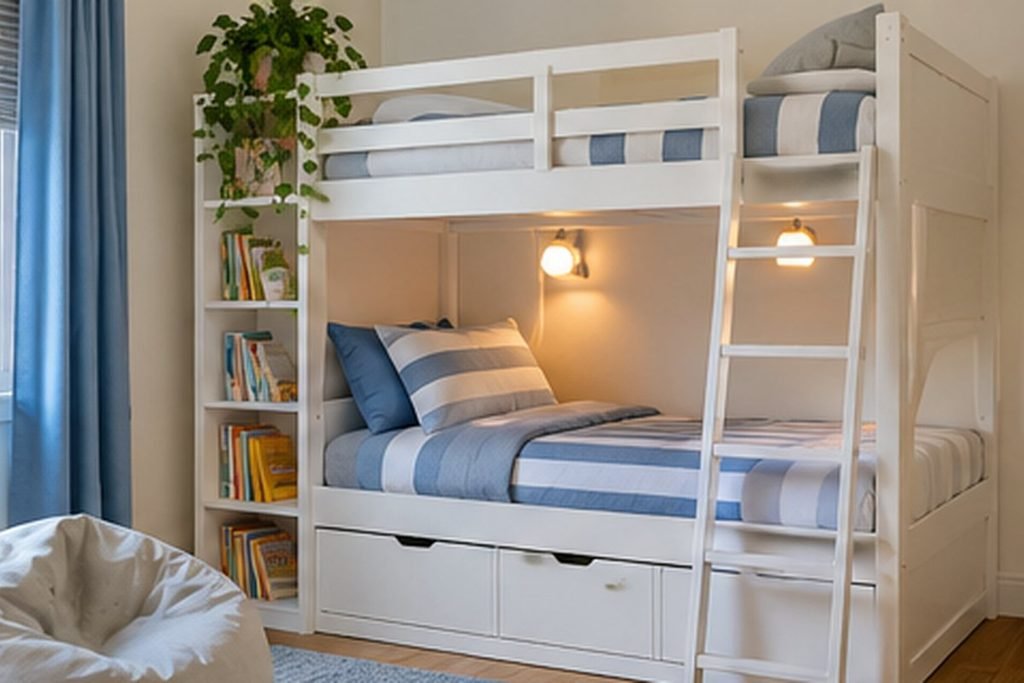
A loft bed can transform an awkward, crowded bedroom by moving the sleeping area above the floor.
The space underneath can become a compact study area, reading corner, or storage zone.
This arrangement is particularly useful in bedrooms where a separate bed and desk would take up too much room.
Before choosing a loft bed, measure the ceiling height, mattress height, and available clearance. Follow the manufacturer’s age and safety requirements.
4. Use Under-Bed Storage for Everyday Items
The area beneath a bed is valuable storage space that often goes unused.
Use low-profile containers to organize toys, extra blankets, seasonal clothes, or craft supplies. Choose containers that slide out easily without scratching the floor.
Clear containers make it easier to identify their contents, while labeled fabric bins give the room a softer appearance.
small bedroom organization ideas
Amazon product suggestion: Under-bed storage containers
5. Create a Compact Study Corner
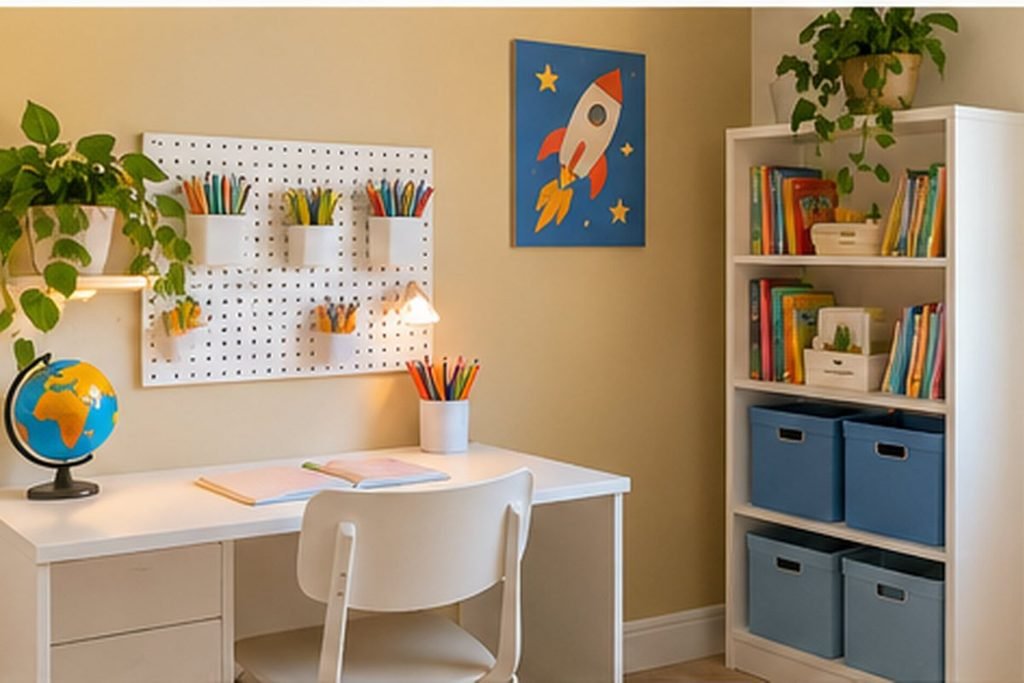
A dedicated study area doesn’t have to occupy an entire wall.
A narrow desk, a comfortable age-appropriate chair, and a small set of wall shelves can create a practical homework station.
Position the desk near natural light where possible. Use desk organizers to keep pencils, notebooks, and other supplies together.
For very small rooms, consider a fold-down desk that can be closed when it isn’t needed.
6. Replace Bulky Bookshelves with Wall-Mounted Book Ledges
Traditional bookshelves can take up a surprising amount of floor space.
Wall-mounted book ledges offer an alternative for displaying a small collection of favorite books.
Arrange the ledges vertically to use otherwise empty wall space. Keep the books and shelves securely mounted and suitable for the child’s age.
This arrangement also makes it easier to rotate books rather than displaying every book at once.
7. Use a Bunk Bed in a Shared Kids’ Bedroom
When two children share a bedroom, a suitable bunk bed can provide two sleeping spaces without requiring two separate bed frames.
Some designs also include drawers or integrated shelving.
Choose a model that fits the room comfortably, leaving enough space to move around and access other furniture.
Important: The US Consumer Product Safety Commission advises that children under six should not use the upper bunk. Check the bunk bed’s guardrails, mattress requirements, ladder, and manufacturer instructions before purchasing.
8. Add a Narrow Wardrobe Instead of a Bulky Dresser
A compact, well-organized wardrobe can provide useful clothing storage without occupying too much floor space.
Look for adjustable shelves, drawers, and hanging sections. A narrow vertical design can make better use of limited wall space.
Sliding doors may also help where there isn’t enough room for traditional wardrobe doors to swing open.
Choose a stable wardrobe and secure it according to the manufacturer’s instructions.
9. Organize Toys with Matching Storage Bins
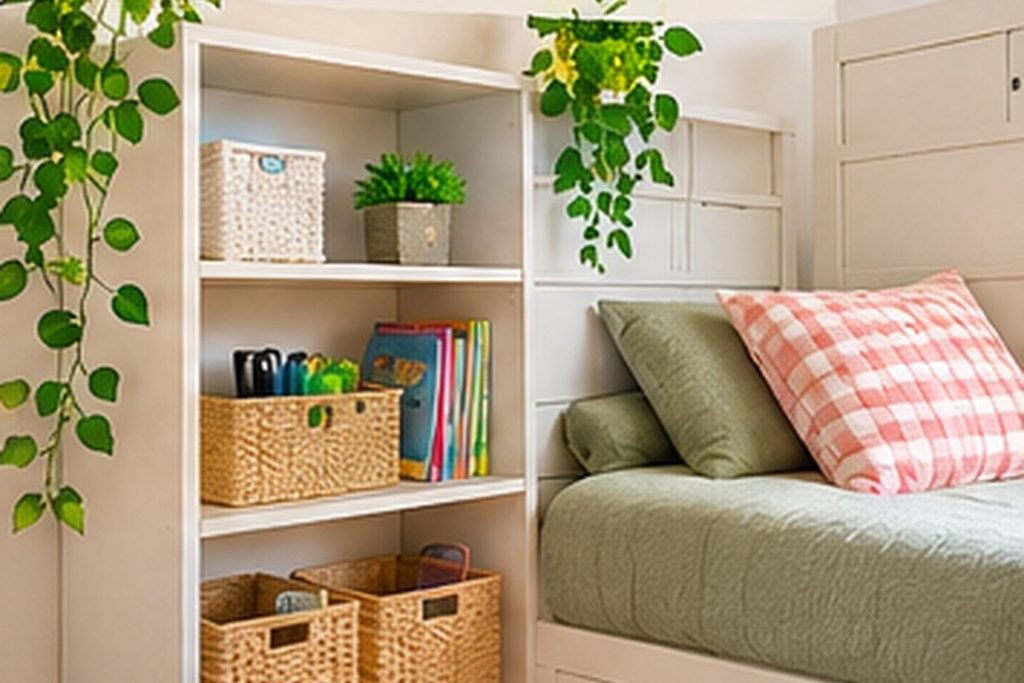
Toys are one of the biggest reasons kids’ bedrooms become cluttered.
Instead of storing everything in one large toy box, divide toys into categories such as building blocks, dolls, art supplies, and puzzles.
Use matching bins in a low storage unit so children can identify where their belongings belong.
Simple labels can make cleanup easier and help maintain an organized room.
Amazon product suggestion: Kids’ storage cube organizer bins
10. Use the Space Behind the Bedroom Door
The back of a bedroom door is often overlooked.
A suitable over-the-door organizer can hold lightweight accessories, small toys, hair accessories, or other everyday items.
Choose a design that doesn’t interfere with the door closing or create a safety hazard.
This is a particularly useful solution for bedrooms with limited closet space.
11. Create a Cozy Reading Corner in an Unused Corner
A reading corner doesn’t need a large armchair or a separate bookshelf.
Use a small floor cushion, a comfortable compact seat, and a nearby wall-mounted book ledge.
A soft rug can help define the space without adding more furniture.
Keep the arrangement simple so the reading corner feels inviting rather than crowded.
12. Choose Furniture That Serves More Than One Purpose
Multifunctional furniture is particularly useful in small kids’ bedrooms.
A storage bench can provide seating and a place for toys. A desk with drawers can combine homework space and storage. A daybed can provide sleeping space while also functioning as a seating area during the day.
Before buying anything new, consider whether an existing piece of furniture could serve two purposes.
This can also help reduce unnecessary spending.
13. Keep the Color Scheme Light and Simple
A small bedroom can feel more open when the main color palette is light and visually consistent.
Consider warm white, soft beige, pale sage, dusty blue, or gentle pastel shades.
You don’t need to avoid color altogether. Add brighter accents through bedding, cushions, artwork, or a small rug.
Keeping larger furniture pieces relatively neutral can also make future bedroom updates easier and less expensive.
14. Use a Small Rug to Define Different Zones
When a bedroom has to accommodate sleeping, studying, and playing, creating separate zones can make the layout feel more organized.
A small rug beside the bed can visually define the sleeping area, while a separate mat can mark a play corner.
Choose a rug that fits the available floor space without blocking doors or creating a tripping hazard.
Avoid adding several oversized rugs that make the room feel crowded.
15. Rotate Toys and Seasonal Decorations
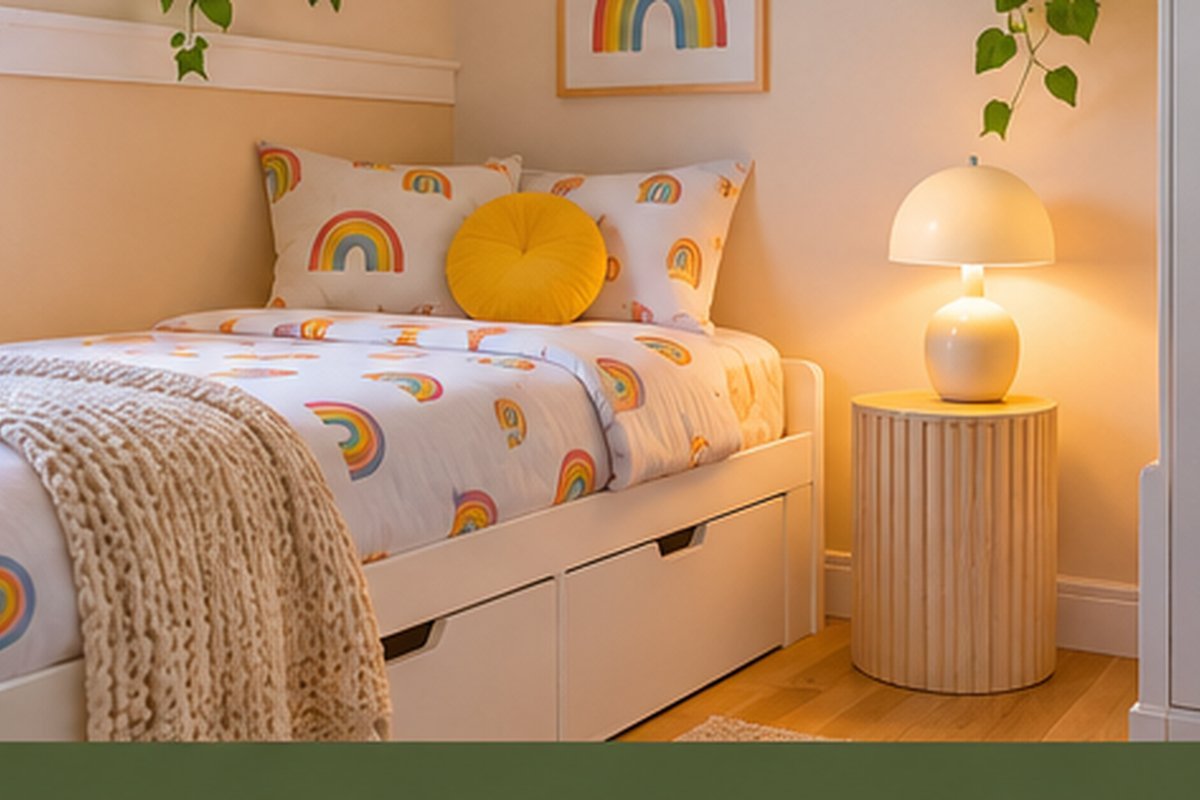
Sometimes the best way to make a small bedroom feel bigger is to reduce the number of things displayed at once.
Keep everyday toys and favorite books accessible, then store less frequently used belongings in labeled containers.
Rotate toys periodically so the room doesn’t become overwhelmed with unnecessary items.
You can also change a few decorative accessories with the seasons rather than purchasing a completely new bedroom theme.
How to Arrange Furniture in a Small Kids’ Bedroom
Even the best furniture choices won’t help if the room layout is inefficient.
Start by measuring the room, including the position of windows, doors, closets, and electrical outlets.
Then consider these practical layout tips:
- Place the bed against a suitable wall to preserve open floor space.
- Avoid blocking windows or natural light.
- Use vertical storage instead of several wide cabinets.
- Keep frequently used belongings accessible.
- Leave a clear route between the bedroom door, bed, and other furniture.
- Choose furniture based on the actual room measurements rather than appearance alone.
A simple floor plan can help you test different arrangements before moving heavy furniture.
Budget-Friendly Ways to Make a Small Kids’ Bedroom Look Better
You don’t need to replace every piece of furniture to improve a child’s bedroom.
Start by decluttering toys, organizing existing storage, and rearranging furniture.
Repurpose baskets and containers you already own. Add simple wall artwork, update the bedding, or repaint a small section of the room.
If you have a limited budget, prioritize functional items such as storage bins, drawer organizers, and compact shelving before purchasing decorative accessories.
The best small bedroom makeover is one that improves everyday use without creating unnecessary expenses.
Important Kids’ Bedroom Safety Tips
A space-saving bedroom should also be a safe bedroom.
Before adding furniture or storage:
- Anchor dressers, bookcases, and other tall furniture securely to the wall.
- Keep heavier objects on lower shelves.
- Avoid placing attractive toys on top of furniture where children may climb to reach them.
- Follow the manufacturer’s instructions for bunk beds and loft beds.
- Keep windows, doors, and accessible pathways unobstructed.
- Keep cords and electrical cables away from areas where children play or sleep.
The US Consumer Product Safety Commission provides additional guidance through its childproofing and furniture tip-over safety recommendations.
Frequently Asked Questions
1. How do you maximize space in a small kids’ bedroom?
Choose multifunctional furniture, use vertical storage, organize toys in labeled containers, and make use of under-bed space. Keep the center of the room as open as possible.
2. What type of bed is best for a small kids’ bedroom?
A twin bed with built-in drawers is a practical option for many small bedrooms. Loft beds may work for suitable older children, while bunk beds can help when siblings share a room.
Always consider age, room dimensions, ceiling height, and manufacturer safety requirements.
3. How can I organize toys in a small bedroom?
Use categorized storage bins, low cubbies, baskets, and under-bed containers. Keep everyday toys accessible and rotate less frequently used items.
4. How can I make a small kids’ bedroom look bigger?
Use a light color palette, avoid oversized furniture, maximize natural light, and keep floors as clear as possible. Wall-mounted shelves can also reduce the need for additional floor furniture.
5. What furniture should I avoid in a small kids’ bedroom?
Avoid unnecessarily bulky furniture, oversized decorative pieces, and storage units that block walkways. Choose pieces that fit the room’s measurements and serve a useful purpose.
6. How can I create a study area in a small kids’ bedroom?
Use a compact desk, a suitable chair, wall-mounted storage, and simple desk organizers. A fold-down desk can be useful when floor space is particularly limited.
Final Thoughts
A small kids’ bedroom can still be comfortable, organized, and full of personality.
The most effective approach is to make every piece of furniture count, use vertical space wisely, and create practical storage systems that your child can actually use.
Start with one improvement at a time. You might begin with under-bed storage, reorganize the toys, or create a small study corner.
With thoughtful planning, even a compact bedroom can become a welcoming place to sleep, learn, play, and grow.
As an Amazon Associate I earn from qualifying purchases.
1 thought on “15 Small Kids Bedroom Ideas That Maximize Space”