
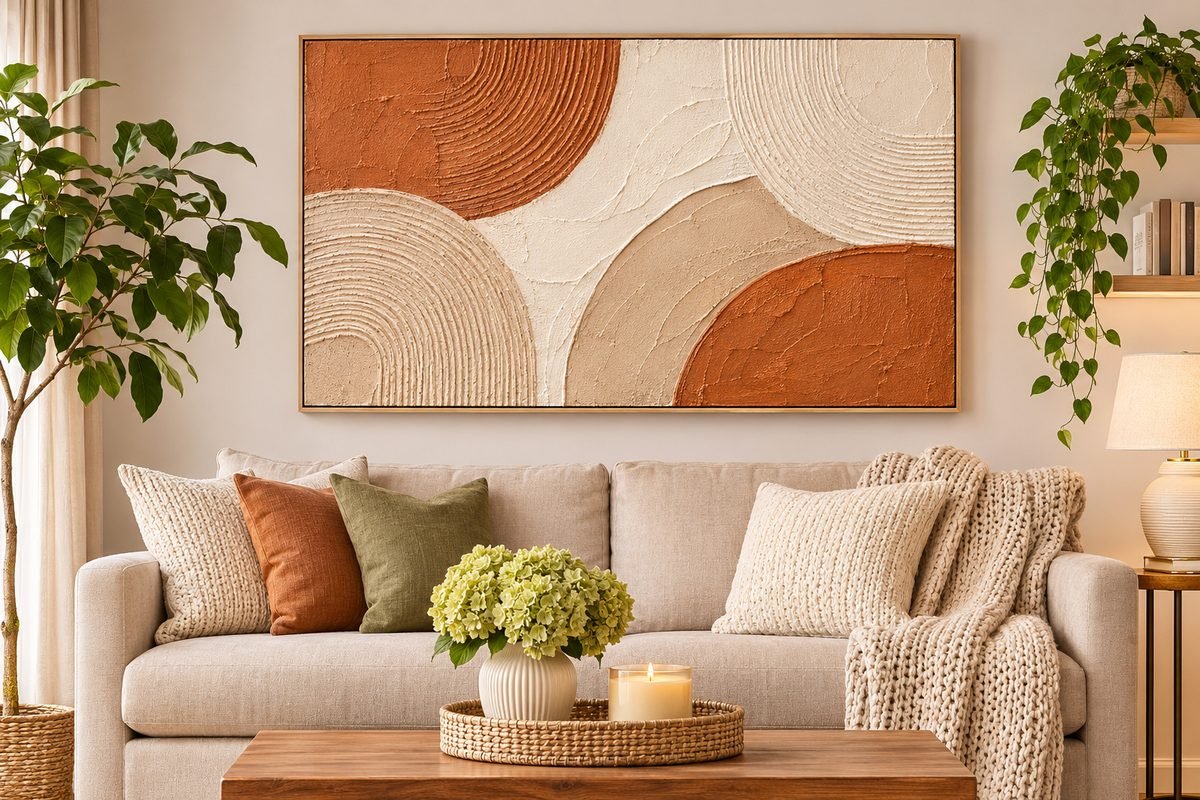
Looking for a simple way to make your living room feel more stylish without spending a fortune on expensive artwork? DIY canvas wall art is a creative and budget-friendly solution. With a few basic supplies, some paint, and a little imagination, you can turn a plain canvas into a beautiful piece of decor that complements your home.
The best part is that you don’t need to be a professional artist. From easy abstract designs to textured statement pieces, there are plenty of canvas art projects that beginners can try at home.
Whether you love neutral interiors, modern designs, or colorful accents, these 15 DIY canvas wall art ideas will help you create artwork that feels personal, stylish, and perfectly suited to your living room.
Basic Supplies for DIY Canvas Wall Art
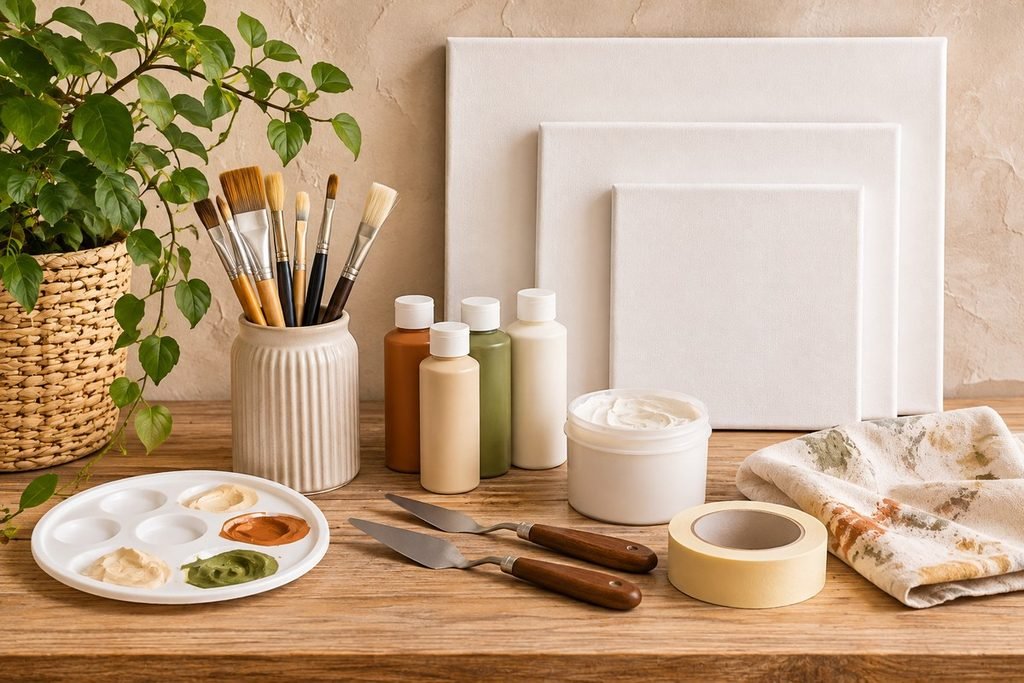
Before starting your project, gather a few simple materials. You may already have some of these at home.
- Blank stretched canvases in your preferred sizes
- Acrylic paint in colors that complement your room
- Paintbrushes in different sizes
- Palette knives for textured designs
- Painter’s tape for clean geometric lines
- Texture paste or modeling paste
- A pencil for light sketching
- A mixing palette and water container
- Drop cloth or old newspaper to protect your work surface
Helpful tip: Choose your canvas size before buying supplies. A large canvas can create a dramatic focal point, while two or three smaller canvases work beautifully as a gallery-style arrangement.
15 DIY Canvas Wall Art Ideas for a Stylish Living Room
1. Neutral Abstract Canvas Art
Neutral abstract artwork is a beautiful choice for living rooms with warm, minimal, or modern interiors. Use shades of beige, cream, taupe, and soft brown to create an understated design.
Apply paint using broad brushstrokes, curved shapes, or overlapping blocks of color. The design doesn’t need to look perfect. Slightly uneven shapes can give the artwork a more natural, artistic appearance.
Styling idea: Hang one large canvas above your sofa or console table for a calm, sophisticated look.
2. Minimalist Line Art Canvas
If you prefer simple decor, try creating minimalist line art. Use black or dark brown paint on a warm white or cream canvas.
Draw a few flowing lines, abstract shapes, or simple architectural-inspired forms. Keep the design uncluttered and leave plenty of empty space around the artwork.
This style works particularly well in Scandinavian, contemporary, and minimalist living rooms.
3. DIY Geometric Canvas Art
Geometric artwork adds structure and visual interest to plain walls. You can create this design using painter’s tape and two or three coordinating paint colors.
Apply painter’s tape to form triangles, rectangles, or diagonal sections. Paint each area, allow it to dry, and carefully remove the tape.
For a modern look, try combinations such as terracotta and cream, olive and beige, or charcoal and warm white.
4. Soft Color-Block Wall Art
Color-block canvas art is an easy project for beginners because it doesn’t require detailed painting skills.
Divide your canvas into large sections and fill each section with a different color. You can use rounded shapes, horizontal blocks, or simple overlapping forms.
Choose colors that already appear in your living room so the finished artwork feels connected to the rest of your decor.
5. Two-Tone Abstract Painting
Sometimes two colors are all you need to create beautiful wall art. Select two complementary shades and use them to form large abstract shapes across your canvas.
For example, combine muted sage with cream, terracotta with beige, or soft brown with ivory.
Try blending the edges slightly or leaving them clearly defined for a more graphic appearance.
6. Textured Plaster-Effect Canvas
Textured canvas art adds depth and dimension to a living room. It is especially attractive in neutral spaces where you want visual interest without introducing too many colors.
Apply modeling paste or a suitable texture medium to your canvas using a palette knife. Create gentle waves, raised curves, or simple abstract patterns.
Once the texture is completely dry, leave it white or apply a thin coat of beige or ivory paint.
Important: Check that your canvas and texture medium are compatible, and follow the product’s drying instructions before hanging the artwork.
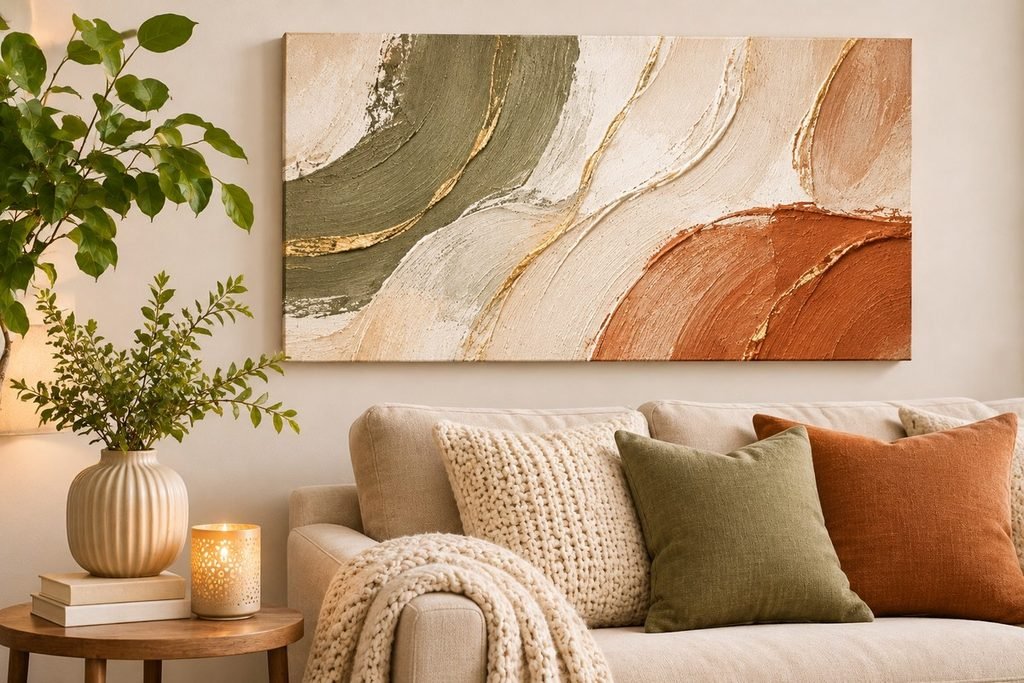
7. Raised Wave Texture Art
Create a flowing wave pattern using texture paste and a palette knife. Start with a neutral canvas and apply the paste in curved, overlapping strokes.
You can make the waves subtle or more pronounced depending on the amount of texture you prefer.
This design looks especially attractive above a sofa, where its horizontal movement complements the shape of the furniture.
8. Minimalist Mountain Landscape
A simple mountain-inspired painting can bring a peaceful, nature-inspired feel to your living room.
Use muted shades of beige, gray, olive, or dusty blue to create layered mountain shapes. Begin with the background, then add larger shapes in the foreground.
Keep the details minimal for a contemporary look that works well with neutral furniture and natural materials.
9. Layered Neutral Abstract Art
Layered artwork is a great way to create a more interesting canvas without using complicated techniques.
Start with a light base color. Add overlapping shapes, broad brushstrokes, and a few contrasting details. Allow some of the earlier layers to remain visible.
Try combining cream, sand, warm gray, and muted brown for a soft, coordinated finish.
10. DIY Plaster-Inspired Minimalist Art
For a subtle statement piece, create a minimalist design using a textured background and one simple raised shape.
You could make a large arch, a circle, or an abstract curved form. Keep the entire artwork within one color family, such as ivory, warm white, or pale beige.
The combination of texture and simple shapes makes this design feel elegant without looking overly decorative.
11. Oversized Statement Canvas
An oversized canvas can make a living room feel more complete, especially when a large wall looks empty.
Choose a design that suits your room, such as a neutral abstract painting, a textured composition, or a large geometric pattern.
Before starting, measure the wall and consider the furniture below it. Artwork above a sofa should generally feel proportionate to the seating area rather than appearing too small or too large.
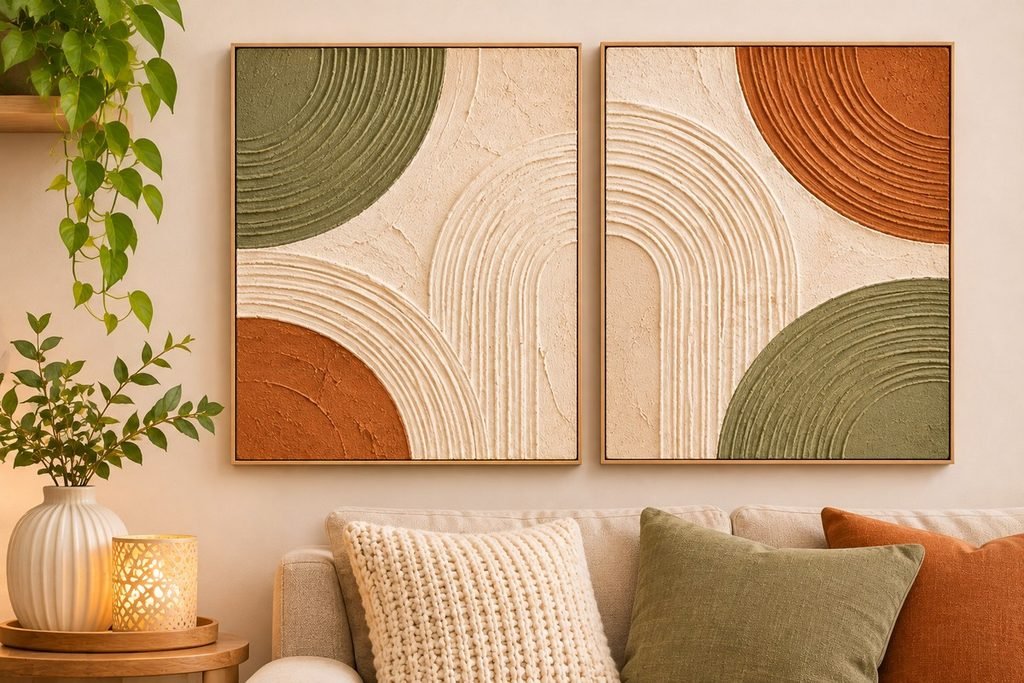
12. Two-Panel Abstract Canvas Art
Instead of creating one large painting, divide your design across two canvases.
You can paint matching abstract shapes, flowing lines, or a continuous color pattern that visually connects both panels.
Hang the canvases side by side with a small, even gap between them. This arrangement works particularly well above sofas, beds, and long console tables.
13. Fabric-Wrapped Canvas Art
Fabric is another creative way to make decorative wall art without painting an elaborate design.
Choose a fabric with a subtle pattern, woven texture, or neutral color. Wrap it tightly around a canvas or suitable backing board and secure it neatly at the back.
Linen-look fabric, simple stripes, and understated patterns can create a warm, relaxed appearance.
Make sure the fabric is pulled evenly so the finished piece looks smooth and professional.
14. Soft Ombre Canvas Painting
Ombre artwork features a gradual transition from one color to another. It is an easy technique to experiment with if you enjoy painting.
Choose two related shades, such as cream and beige or pale blue and muted gray. Apply the colors in sections and gently blend the transition while the paintis still workable.
Keep the blending soft for a calm, modern look.
15. Mixed-Media Neutral Canvas Art
For something a little different, combine paint with other decorative materials.
Start with an acrylic-painted background, then add suitable textured details using modeling paste or other canvas-safe materials. You can experiment with raised lines, layered shapes, and subtle tonal contrasts.
The key is to keep the composition balanced. Too many materials or decorative elements can make the artwork look cluttered.
How to Choose the Right Canvas Size for Your Living Room
The right canvas size can make a big difference to the overall appearance of your wall.
- Small canvases: Ideal for narrow walls, shelves, and small decorative arrangements.
- Medium canvases: A good option for smaller seating areas or walls with limited space.
- Large canvases: Perfect for creating a focal point above a sofa or console table.
- Two- or three-panel arrangements: Useful for filling wider walls while creating a coordinated look.
Before purchasing a canvas, measure the available wall space. You can even use paper cutouts in different sizes to test the arrangement before committing to a design.
Tips to Make Your DIY Canvas Art Look Professional
A few simple choices can make homemade artwork look more polished.
- Choose a limited color palette: Two to four coordinating colors are usually enough for a balanced design.
- Don’t overcrowd the canvas: Empty space can make abstract artwork feel more intentional.
- Use quality brushes and tools: The right brushes and palette knives can help create cleaner details and better texture.
- Let each layer dry: Rushing between layers can cause colors and textures to mix in unwanted ways.
- Consider your room’s style: Your artwork should complement your furniture, rugs, curtains, and existing decor.
- Plan the placement: Measure the wall and test the canvas position before hanging it.
You can also use a simple floating frame to give a finished canvas a more refined appearance.
Frequently Asked Questions
Is DIY canvas wall art suitable for beginners?
Yes. Many projects, including color-block painting, geometric designs, minimalist line art, and simple abstract paintings, are beginner-friendly. Start with a small canvas and a limited color palette.
What paint is best for DIY canvas art?
Acrylic paint is a popular choice because it is easy to use, dries relatively quickly, and works well for many canvas projects. Always check that the paint is suitable for your canvas surface.
How can I make canvas art look expensive?
Choose a coordinated color palette, keep the design balanced, and avoid adding too many decorative details. Textured finishes, oversized designs, and simple floating frames can also give artwork a more polished appearance.
Can I make DIY canvas art without painting skills?
Absolutely. Fabric-wrapped canvases, painter’s-tape geometric designs, and simple textured artwork are great alternatives to detailed painting.
How do I choose artwork colors for my living room?
Look at the colors already present in your room. You can repeat shades from your cushions, rug, curtains, or furniture to create a coordinated look.
Final Thoughts
Creating your own wall decor is a simple way to give your living room a fresh and personal touch. Whether you choose neutral abstract painting, textured plaster-inspired designs, geometric shapes, or fabric-wrapped artwork, there are plenty of ways to create something beautiful on a budget.
You don’t need expensive materials or professional painting skills to get started. Pick an idea that matches your home’s style, gather a few basic supplies, and enjoy making artwork that feels uniquely yours.
Which of these DIY canvas wall art ideas would you try first? Save your favorite ideas and come back when you’re ready to refresh your living room walls.